
Gym Business Guide
How to Open a Gym: Costs, Space, Layout and Equipment
A start-to-finish plan for opening a commercial gym or fitness club, from a team that has designed, equipped and run one.
Why we wrote this
Most gyms are won or lost before opening day
Opening a gym is a real estate decision, a design project, an equipment purchase and an operating business all at once. Most of the expensive mistakes happen early: a lease signed before anyone checked whether the layout fits, a budget that spends everything on equipment and leaves nothing for the first six months, or a floor plan that looks good on paper and fails once members show up.
We have been on every side of it. BeneFitness came up with the concept for Knot Springs in Portland, helped design the club with the architects, supplied the equipment and then ran its daily operations with a staff of about 80. Since 2009 we have consulted on fitness spaces from small studios up to a 90,000 square foot facility. This guide is the order we walk new owners through, from first idea to a full membership.
The short answer
What it takes to open a gym
About $50,000 to $500,000 for most independent gyms
Small studios sit at the low end. Full-service clubs with locker rooms, recovery and a large equipment package regularly pass $1 million. Rent, build-out and equipment drive most of the difference.
Usually 6 to 18 months from idea to opening
Finding the right space and getting permits take longer than most people expect. Equipment often needs 6 to 16 weeks after you order it.
Test-fit the layout before you sign a lease
A one-week layout study can tell you whether a space works for your concept. It is the cheapest insurance you will buy.
Step 01
Define the concept and the member
Every later decision gets easier once you can describe your member in one sentence. A 24-hour neighborhood gym, a coached strength studio and a wellness club with pools need completely different spaces, staff and budgets.
- Who is it for?Age, income, goals and how far they will drive. Most members come from within 10 to 15 minutes.
- What is the model?Open gym, classes, personal training, a hybrid, or a full club with amenities. The model sets your staffing and your floor plan.
- What will you charge?Your price point decides the finish level, the equipment brands and how many members you need to break even.
- Who else is nearby?Visit every competitor within a short drive. Look for what members complain about and design the answer into your space.
Step 02
Run the numbers and write the business plan
Lenders, landlords and investors will ask for a plan. More importantly, you need it yourself. Build it from the member count backward: how many members, at what price, cover your monthly costs, and how long it takes to get there.
- RevenueMemberships, personal training, classes, day passes, corporate partnerships and retail. Be conservative on how fast membership grows.
- Monthly costsRent, payroll, utilities, insurance, software, cleaning, marketing and equipment payments.
- Break-evenThe number of paying members you need each month. Know it before you sign anything.
- Cash reservePlan to cover three to six months of operating costs while membership builds. Running out of cash after opening is one of the most common reasons new gyms close.
Step 03
Find the space and test-fit it before you sign
The space shapes everything that follows. Before you sign a lease, have a gym designer lay your concept into the actual floor plan. You will learn whether the room fits your zones, where the heavy flooring has to go and what the build-out really involves.
1,500–3,000sq ft
Studio
Personal training, small group classes or a focused strength studio. Lower rent and build-out, but every square foot has to work.
4,000–12,000sq ft
Neighborhood gym
Cardio, strength, free weights and a class or functional area. Locker rooms, front desk and parking start to matter.
15,000+sq ft
Full club
Multiple training floors, studios, locker rooms, recovery and amenities. The design and operating plan get as much attention as the equipment.
- Ceiling heightIdeally 14 feet or more where people lift overhead or use pull-up rigs. Cardio and machine areas can work with less.
- Floor structure and soundUpper floors and spaces above other tenants need heavier flooring and sometimes structural review where weights drop.
- Zoning and occupancyConfirm the space is zoned for a fitness use and what occupancy, restroom and accessibility requirements apply.
- Power, HVAC and plumbingTreadmills need dedicated circuits, a full gym needs serious air handling, and locker rooms with showers add real plumbing cost.
- Parking and visibilityMembers drive at peak hours. A great space with no parking struggles.
- Landlord termsAsk for tenant improvement allowances and free rent during build-out. Both are common for gym tenants.
Step 04
Design the layout and see it in 3D
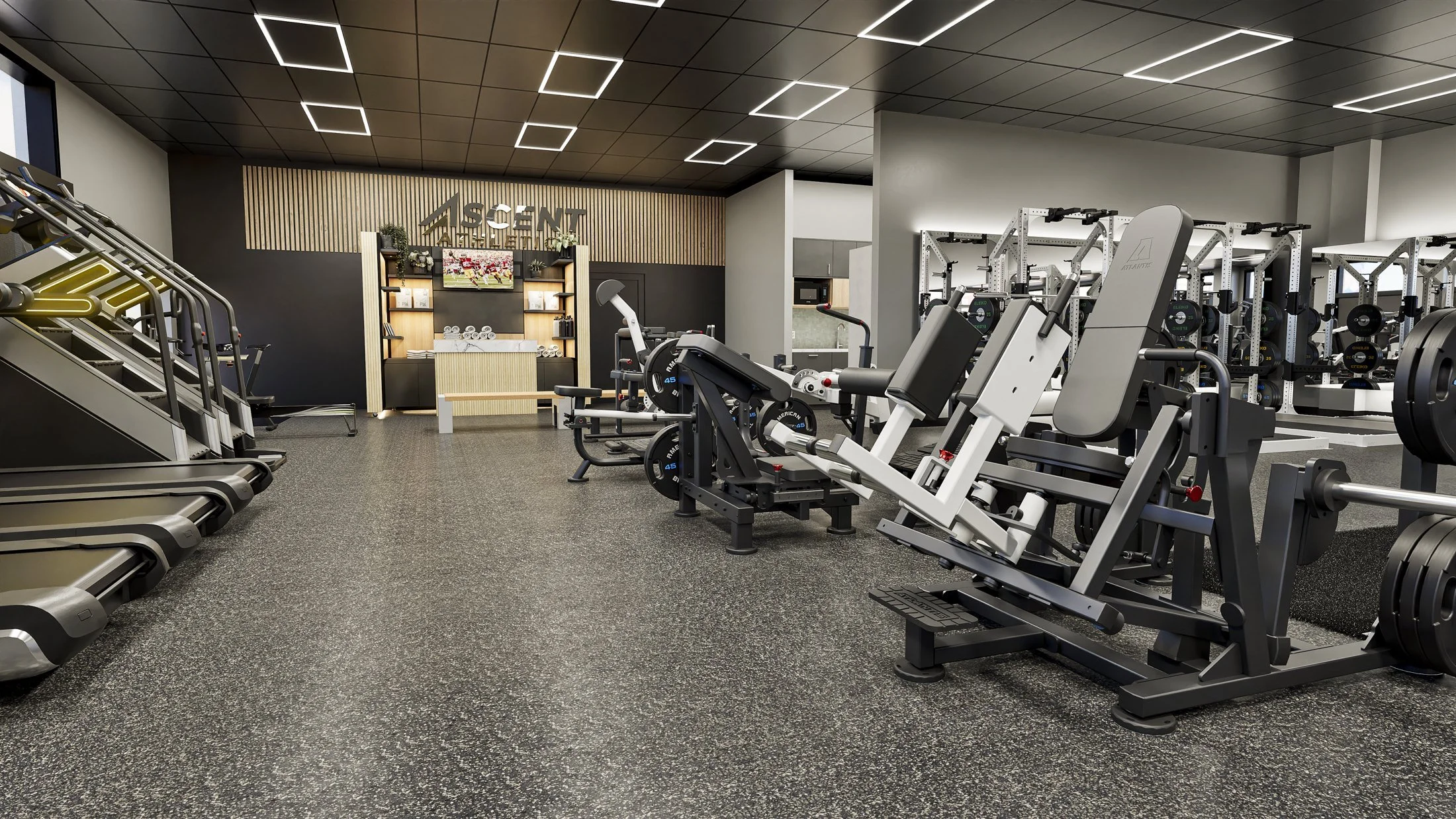
Design the gym around how members move, not around an equipment catalog. Zone the floor, plan sight lines from the front desk, and make sure the busiest hour still flows. Then build it in 3D, so you, your partners and your lenders can walk through the space before anything is ordered.
- Zones firstCardio, strength machines, free weights, functional training, studios and recovery each get their own area and flooring.
- Flow and supervisionMembers should see the whole gym from the entrance, and staff should see it from the desk.
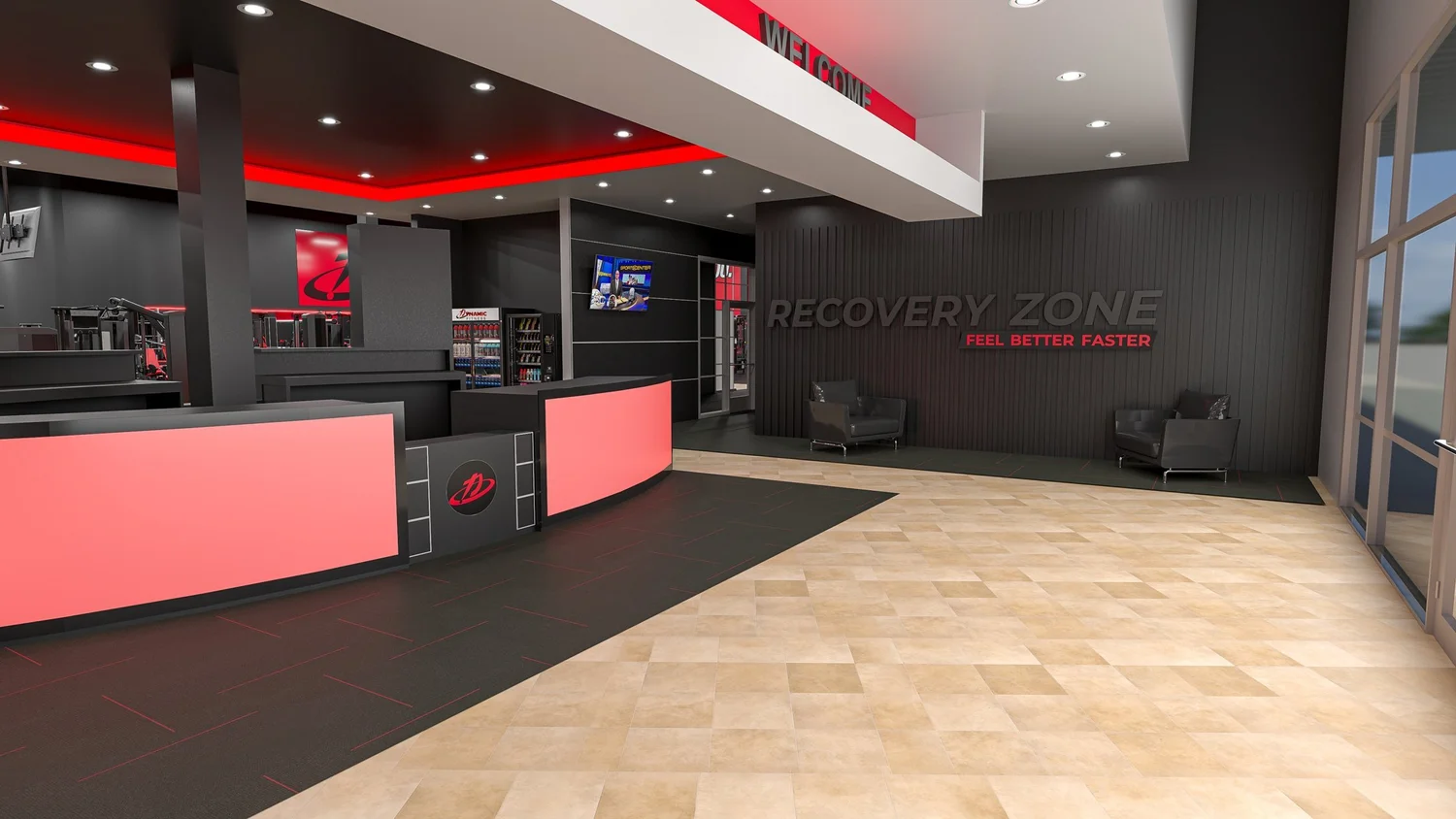
- 3D renderingsPhotorealistic renders help you sell founding memberships, win over investors and catch design problems while they are still cheap to fix.
- Branding in the spaceWall graphics, logo flooring and turf with custom markings make a new gym look established on day one.
More detail in our gym floor plan and layout guide and on our gym design and 3D rendering page.
Step 05
Budget the build-out and startup costs
Costs vary widely by market, the condition of the space and the experience you want to create. These are the line items to plan for. Get real quotes for each one before you finalize the plan.
- Lease costsSecurity deposit, first months of rent and any rent you pay during construction.
- Build-outWalls, lighting, HVAC, electrical, finishes and locker rooms. Often the largest line item in a raw or older space.
- EquipmentRoughly $30,000 to $100,000 for a studio, $100,000 to $300,000 for a neighborhood gym, and $300,000 to well over $1 million for a full club.
- FlooringRubber, turf and platforms. Free weight zones need thicker flooring than cardio and machine areas.
- TechnologyMember software, access control, sound, screens and the front desk.
- Design and permitsLayout, 3D renderings, architectural drawings and permit fees.
- Pre-opening payroll and marketingStaff need to be hired and trained, and founding memberships need to be sold, before the doors open.
- Working capitalThree to six months of operating costs held in reserve.
Step 06
Choose the equipment and flooring
Buy for your members and your layout, not for the showroom. The right mix of brands often beats a single-brand package on quality, price and lead time. Plan delivery and installation around your construction schedule so nothing sits in a hallway.
- Commercial grade onlyConsumer equipment does not survive gym use and can create warranty and liability problems.
- Match the conceptA coached strength studio needs racks, platforms and turf. A neighborhood gym needs more cardio and selectorized machines.
- Lead timesOrder early. Popular racks, custom colors and imported equipment can take months.
- FinancingLeasing or financing can spread equipment costs over time and protect your cash reserve.
- InstallationCertified installers, sequenced after flooring and before the final cleaning.
- Service after openingPreventive maintenance keeps machines running and protects your warranty.
See our commercial gym equipment and flooring services.
Step 07
Pre-sell, hire and open
The strongest openings start selling 60 to 90 days ahead. Your 3D renderings become the marketing: founding member offers, social posts and a pre-sale page all work better when people can see the space.
- Founding membershipsA limited founding rate builds your member base and early cash flow.
- SoftwareBooking, billing and check-in, whether you use Mindbody or a custom booking app.
- StaffHire for hospitality as much as for certifications, and train everyone on the same member experience.
- Soft openingOpen to founding members first, fix what you find, then launch.
Step 08
Run it like an operator
A gym is a hospitality business. Running Knot Springs day to day taught us more about design than any drawing did: where members bunch up at 6 p.m., which equipment breaks first, how long it takes to clean a locker room and which details people mention in reviews.
That is why we design from the operator's side of the desk. Schedules, cleaning, maintenance, staffing and programming all affect the layout, and they are much easier to plan before construction than to fix after.
Timeline
A typical path from idea to opening day
- Months 1–2: concept and planDefine the member, model and budget. Start the business plan.
- Months 2–4: site search and test-fitTour spaces, test-fit the layout and negotiate the lease.
- Months 3–6: design and permitsFinal layout, 3D renderings, drawings, permits and the equipment order.
- Months 5–10: build-outConstruction, then flooring, then equipment delivery and installation.
- 60–90 days before openingPre-sale, hiring, software setup and staff training.
- Opening and first 90 daysSoft open, adjust, launch and track member numbers against the plan.
Avoid these
Mistakes we see new owners make
Signing the lease first
Then finding out the ceiling is too low for the rig or the floor cannot take free weights.
Spending it all on equipment
A beautiful floor with no money left for marketing or the first slow months.
Designing from a catalog
Rows of machines in whatever space is left, instead of zones built around how members train.
Underestimating locker rooms and HVAC
Plumbing and air handling are expensive and hard to add later.
Ordering late
Equipment that arrives weeks after opening day, or a launch pushed back to wait for it.
Forgetting operations
No plan for cleaning, maintenance and staffing until the doors are already open.
How we help
One partner from the first idea to a full membership
Hire us for the whole project or just the piece you need. Owners usually start with a concept call and a layout test-fit, then keep us through design, equipment and opening.
- Concept and planningMember, model, budget and the numbers behind them.
- Site test-fitsLay your concept into a space before you sign the lease.
- Gym design and 3D renderingsLayouts, finishes and photorealistic renders and walkthroughs.
- Equipment and flooringBrand-agnostic selection, delivery and certified installation.
- Service after openingPreventive maintenance and warranty support on what you buy through us.
- Operations and programmingStaffing, classes and member experience from a team that has run a club.
Questions
Opening a gym: common questions
How much does it cost to open a gym?
Most independent gyms cost roughly $50,000 to $500,000 to open. A small personal training or class studio can be at the low end. Full-service clubs with locker rooms, recovery areas and a large equipment package often cost more than $1 million. Rent, build-out and equipment are the biggest variables.
How much space do I need for a gym?
A studio can work in 1,500 to 3,000 square feet. A neighborhood gym with cardio, strength, free weights and a class area usually needs 4,000 to 12,000 square feet. Full clubs start around 15,000 square feet and go much larger. The right size depends on your model and how many members train at the busiest hour.
How long does it take to open a gym?
Usually 6 to 18 months from idea to opening. Finding the space, permits and build-out take the most time, and equipment can take 6 to 16 weeks to arrive after ordering.
How much does commercial gym equipment cost?
As a rough guide, $30,000 to $100,000 for a studio, $100,000 to $300,000 for a neighborhood gym, and $300,000 to well over $1 million for a full club. Brand mix, quantity and custom finishes change the number. Financing and leasing can spread the cost.
Do I need a business plan to open a gym?
Yes. Lenders, landlords and investors will ask for one, and it tells you how many members you need to break even before you commit to a lease.
Should I find the space before I design the gym?
Find candidate spaces, then test-fit your layout into each one before you sign. A test-fit shows whether the space fits your concept and what the build-out will really cost.
Can you help if my gym is outside Oregon or Washington?
Yes. We are based in Portland and work on gym projects nationwide. Design, 3D renderings and planning work anywhere, and we coordinate equipment and installation across the country.
Planning to open a gym?
Let’s talk about your gym
Tell us about your concept, your market and where you are in the process. We’ll follow up by email with next steps, whether you need a full partner or a second opinion on a space.
Book a consultation